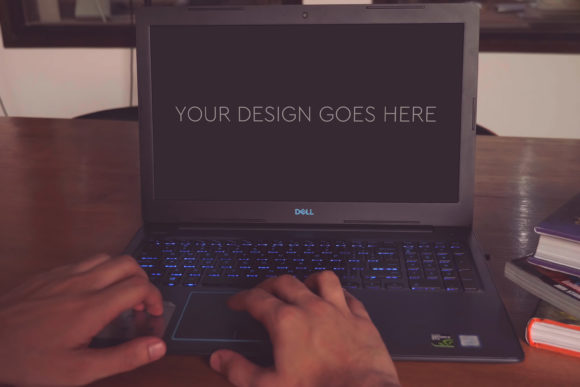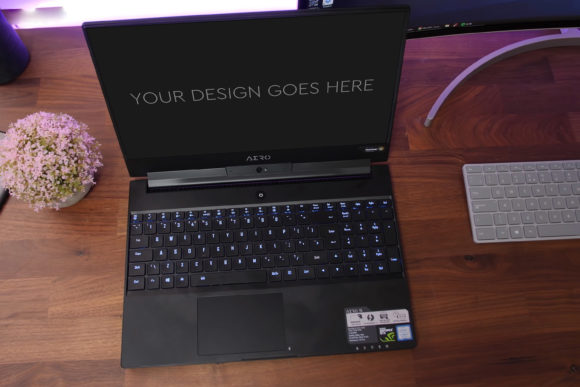
Gaming Laptop Mockup 48: An Evaluation of a Practical Presentation Asset
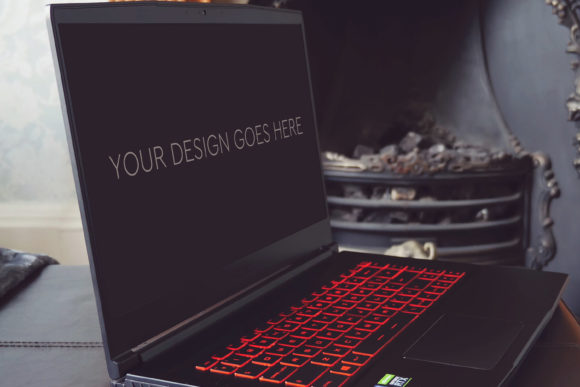
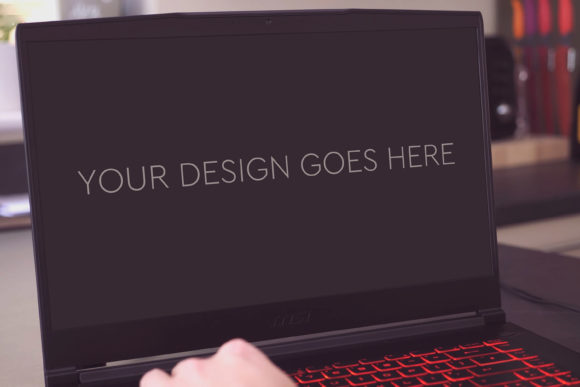
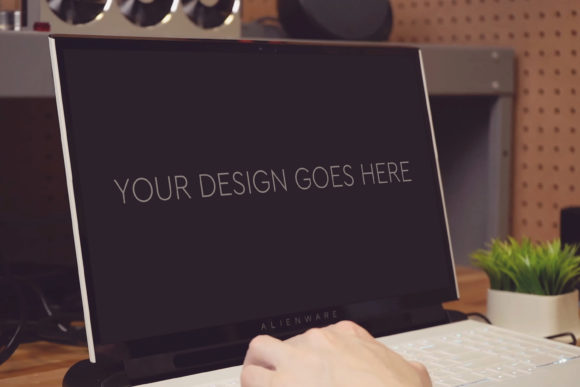
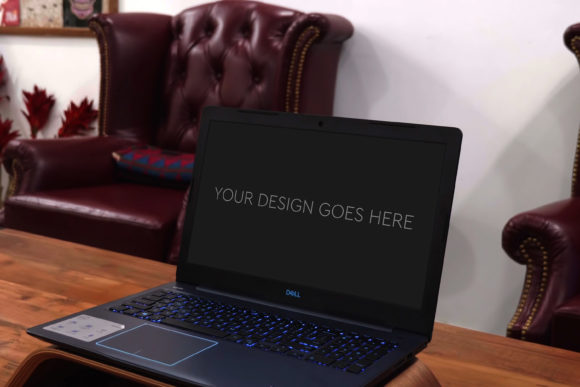
In the digital design landscape, presentation is often the critical final step between a concept and its perceived value. For professionals showcasing interface designs, marketing visuals, or branding elements within a gaming context, finding a reliable and high-quality mockup template can streamline this process significantly. Gaming Laptop Mockup 48 represents a specific resource aimed at fulfilling this need. It is not merely a generic image but a structured Photoshop file designed to allow creators to insert their work into a realistic gaming laptop scene with minimal effort.
Core Characteristics and Immediate Utility
The primary description outlines a straightforward package: a single Photoshop PSD file at dimensions of 3000 by 2000 pixels with a resolution of 300 DPI. The advertised ease of use hinges on the implementation of Smart Objects. In practical terms, a Smart Object in Photoshop acts as a container layer. For a user, this means they can double-click on the designated screen area of the mockup, paste in their own design or screenshot into the opened file, save it, and the mockup updates automatically. This bypasses complex masking, perspective adjustments, or lighting matching, which can be time-consuming tasks.
The file being layered and grouped is another key characteristic. This suggests an organized structure within the PSD, where elements like the laptop body, screen, keyboard, background, and any included shadow or reflection effects are separated into individual layers or folders. This organization provides flexibility beyond the simple screen insertion. A user might, for example, adjust the opacity of a reflection, temporarily hide a background element to suit a different color scheme, or subtly modify a shadow. It offers a degree of control without requiring the user to rebuild the entire scene from scratch.
Assessing Quality and Workflow Integration
The promise of high quality in a mockup rests on several factors. The stated size and DPI indicate suitability for both detailed online viewing and potential print applications, such as portfolio books or promotional materials. The inclusion of "beautiful photo filters" is a note that requires contextual understanding. Typically, this refers to adjustment layers within the PSD—perhaps preset curves, color balances, or vignettes—that give the overall composite a specific tonal or mood consistency. Their value lies in providing a polished, cohesive look immediately, which can be a boon for users less versed in photo finishing. However, their use is entirely optional; a professional with a specific visual direction can disable or modify these filters.
From a usability perspective, the core strength of Gaming Laptop Mockup 48 is its automation of the compositing step. The real-world performance benefit is speed and consistency. For a freelancer needing to present five different game UI concepts to a client, or a marketer creating multiple ad variations for a campaign, this mockup allows for batch-like processing. Each design can be popped into the same template, ensuring a uniform and professional presentation style across all deliverables. This consistency itself enhances perceived project quality.
Flexibility and Long-Term Value Considerations
While the mockup is specialized for a gaming laptop context, its flexibility depends on the underlying scene. A generic gaming laptop on a desk might serve a wide range of digital designs. However, a mockup with very specific, branded decals or an extreme angled perspective might be less adaptable. The described ease of editing via Smart Objects primarily applies to the screen content. Major alterations to the laptop angle or environment would require more advanced Photoshop skills, so the template's long-term value is highest for users whose recurring need is simply to place designs onto a standard laptop screen in a believable setting.
The reliability of such a resource is generally high, as it is a static digital file. Once acquired and functioning in one's Photoshop version, it will perform the same task repeatedly. The potential limitations are few but worth noting: compatibility with one's specific version of Photoshop, the possible file size being large due to the high resolution, and the inherent creative constraint of using a pre-defined visual angle. It is a tool for efficient presentation, not for unique scene creation.
Primary Audience and Ideal Use Cases
The practical value of Gaming Laptop Mockup 48 aligns most directly with individuals and teams who regularly need to contextualize their digital work for presentation, feedback, or promotion. This includes UI/UX designers specializing in game interfaces or gaming-related software, graphic designers creating assets for gaming websites or communities, and marketers developing visual content for gaming hardware or services. Educators teaching digital design might use it as a standardized template for student project presentations. Freelancers and small business owners in these niches benefit from the polished output it enables without requiring a budget for custom photography or 3D rendering for every project.
The situations where this mockup proves most effective are often deadline-driven or require volume. Preparing a portfolio section, creating a pitch deck for a game-related project, generating multiple social media preview images for an app launch, or producing consistent visuals for an ongoing client report—all are scenarios where the time saved on technical compositing can be redirected to refining the core design work or managing other project tasks.
Professional Observations and Recommendations
When evaluating such a template, a professional would look beyond the marketing description. They would test the Smart Object functionality to ensure it works intuitively. They would examine the layer groups to see if non-screen elements are logically organized for minor tweaks. They might also assess the base photograph's lighting and style; a mockup with neutral, diffuse lighting is more versatile for inserting various designs than one with strong, colored ambient light that might clash with certain palettes.
A practical recommendation for potential users is to consider their recurring needs. If showcasing designs on a gaming laptop is a frequent requirement, a well-made mockup like Gaming Laptop Mockup 48 is a sensible asset acquisition. It represents a one-time investment that replaces a repetitive manual task. However, if the need is one-off or highly varied—requiring different devices, angles, or environments—then a single laptop mockup might not be the most comprehensive solution. In that case, building a personal library of diverse mockups or learning key compositing techniques might offer more long-term flexibility.
The effectiveness of this mockup ultimately hinges on how well it integrates into a user's existing workflow. For someone already using Photoshop for final output, it is a seamless fit. For teams using other primary software, the utility depends on whether they can easily export designs to be inserted into Photoshop for this final presentation step. Its value is not in being an all-in-one creative suite, but in being a specialized, efficient finisher for a specific presentation context.
In summary, Gaming Laptop Mockup 48 is a focused tool designed to solve a particular presentation challenge. Its worth is tied to its ability to save time, ensure visual consistency, and produce a high-quality composite image with minimal technical overhead. For the professional whose work intersects with the gaming world and who regularly needs to present digital designs in a realistic, engaging context, it is a resource that can enhance both workflow efficiency and output polish. Its limitations are those inherent to any predefined template, but for its intended purpose, it represents a practical and objective solution worth serious consideration.