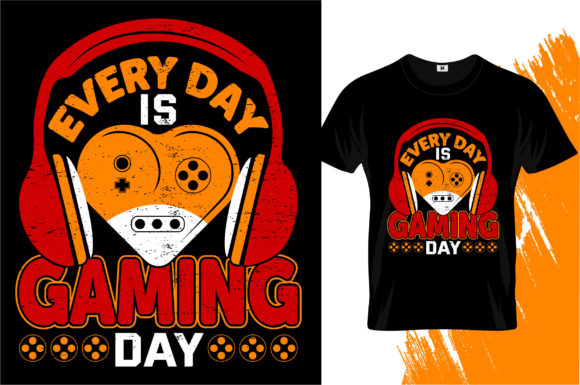
Every Day is Gaming Day: A T-Shirt Design and a Statement
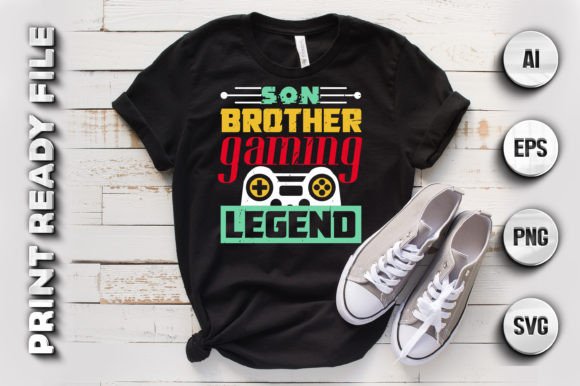
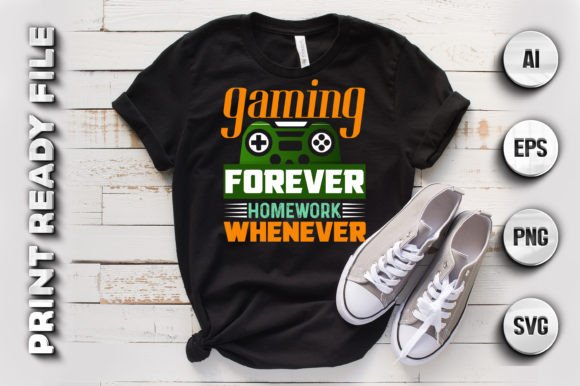
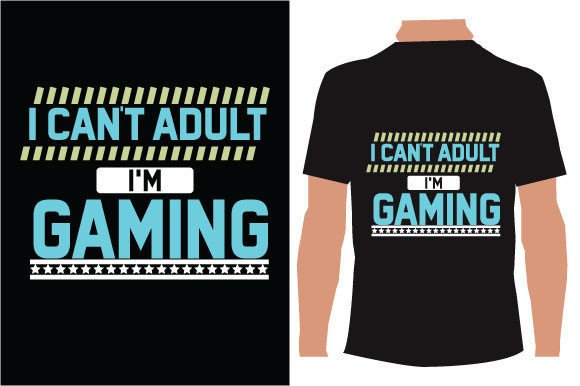
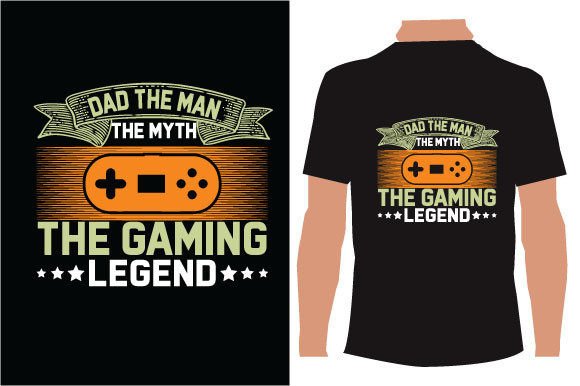
For gamers and enthusiasts, the phrase "Every day is gaming day" transcends a simple motto; it's a lifestyle affirmation. It celebrates the pervasive role of gaming in modern culture, whether as a hobby, a social activity, or a professional pursuit. Translating this ethos into a tangible product, the Every Day is Gaming Day T-shirt Design provides a ready-made asset for creators and businesses looking to offer merchandise that resonates with this passionate community. This design serves not merely as a graphic but as a versatile project component, integrated into a broader workflow of product creation and branding.
The Design as a Core Asset in Your Production Pipeline
In the workflow of merchandise creation, the design file is the foundational asset. The Every Day is Gaming Day T-shirt Design package arrives as this critical starting point. Understanding where it fits is key. It sits at the intersection of creative concept and manufacturing-ready execution. You begin with a concept—the idea of selling apparel that celebrates a gaming-centric identity. Instead of initiating a complex design process from scratch, you acquire a professionally crafted, vector-based solution. This leapfrogs the initial ideation and technical illustration stages, placing you directly into the preparation and customization phase.
This integration impacts efficiency profoundly. For a small business owner or a freelance creator managing an online store, time spent on original art creation can be significant. By utilizing this pre-made design, you redirect resources towards other crucial workflow stages: market research, supplier coordination, marketing material development, and customer engagement. The design becomes a plug-in component that accelerates the project timeline from conception to tangible product.
Compatibility and Preparation for Diverse Outputs
The technical specifications of the design file directly influence your preparation steps. The package includes an EPS file, SVG file, and a high-resolution PNG (4500×5400 at 300 dpi). These formats are not arbitrary; they are selected for compatibility with industry-standard tools and platforms.
Before engaging with print vendors or uploading to print-on-demand services, you must ensure your asset meets their requirements. Here, the design inherently aligns with common prerequisites. The vector formats (EPS and SVG) guarantee that the graphic is re-sizable without loss of quality, a non-negotiable factor for applying the same design across different products—from a small mug handle to a large poster. The 300 dpi PNG with a transparent background is typically the exact file type required for direct upload to many e-commerce and apparel printing platforms. Your preparatory task simplifies to extracting the ZIP file and selecting the appropriate format for your chosen output method, eliminating rounds of conversion and quality checks.
Color Customization: Adapting the Asset to Your Product Line
A standout feature of this design is its 100% vector construction and easy color changeability, particularly for dark apparel. This is a workflow consideration that affects both aesthetics and logistics. In merchandise planning, you often need to offer variants—perhaps a black tee with white text and a white tee with black text—to cater to customer preference and inventory diversity.
Using the source AI or EPS file in a program like Adobe Illustrator, you can swiftly modify the color scheme. This process integrates into your workflow after you've decided on your product range. For instance, you might prepare three versions: one for dark shirts, one for light shirts, and a special limited-edition color combo. This flexibility supports consistency across your product line while allowing for variation. It means you aren’t locked into a single look; the one master asset can spawn multiple derivative files for different applications, keeping your digital asset library organized and manageable.
Integration with Print and Production Processes
How does the Every Day is Gaming Day T-shirt Design interact with the actual production? Once your customized files are ready, they move into the hands of printers or into the automated systems of print-on-demand services. The design’s quality controls this interaction. Being made with clean vector shapes ensures there are no stray pixels, fuzzy edges, or complex raster patterns that could cause printing issues, such as ink bleeding or unexpected moiré patterns on fabrics. This reliability translates into fewer rejected samples, smoother communication with suppliers, and ultimately, higher quality final products for your customers.
For those producing stickers, mugs, or other apparel, the same file adapts seamlessly. This multi-use capability streamlines operations. Instead of managing separate design projects for a t-shirt line and a complementary sticker campaign, you use the same core asset. This unified approach aids in branding, as your audience sees a coherent visual identity across different merchandise types, and it simplifies your operational workflow by reducing the number of active design files you need to track and update.
Long-Term Use and Asset Management
A practical consideration in any creative or business workflow is the longevity and re-usability of your assets. The vector nature of the Every Day is Gaming Day T-shirt Design makes it a durable component in your digital toolkit. Beyond the initial launch, you can revisit it for seasonal sales, bundle promotions, or new product types you decide to add later, like hats or phone cases.
Organizing these files for long-term use is straightforward. Keep the original ZIP archive as your master backup. Store the extracted, customized versions in a clearly labeled project folder—perhaps with subfolders for "T-Shirt Variants," "Sticker Files," and "Marketing Mockups." This organization ensures that when you plan a follow-up campaign or need to quickly fulfill a custom order request, the asset is readily available and you understand exactly which file version to use. This contributes to sustained efficiency and reduces the friction of recurring projects.
Practical Implementation for Different User Roles
The utility of this design asset manifests differently depending on the user's role in the workflow.
- For the Entrepreneur/Marketer: It serves as a fast-to-market product. The workflow involves: identifying the target audience (gaming communities), selecting the design as the product core, customizing colors for brand alignment, and deploying it via chosen sales and print channels. The design is the key content that fills the product pipeline.
- For the Content Creator/Blogger: It might integrate as merchandise for audience engagement. The process could be: creating content around gaming, using the design to produce branded merch for patrons or followers, and utilizing the high-res PNG for promotional graphics in posts and videos.
- For the Hobbyist or Community Organizer: The design facilitates group identity. The workflow is more collaborative: deciding on a group slogan, using this ready-made design to produce uniforms or event swag (like for a local gaming tournament), and coordinating the print using the provided files to ensure consistency for all participants.
In each case, the design asset removes the technical barrier of graphic creation, allowing the user to focus on their primary strengths—business strategy, content creation, or community building.
Observations on Quality and Outcome
Integrating a pre-made design of this caliber into your process has observable outcomes. First, it elevates the perceived quality of your final product. A crisp, professionally scaled graphic printed on a t-shirt reflects a premium offering compared to a poorly rasterized or amateurish design. This directly impacts customer satisfaction and brand reputation.
Second, it introduces a level of predictability. When you know your source file is technically robust, you can forecast the production outcome with greater confidence. This reduces uncertainty in the workflow, allowing for more accurate planning in terms of budget, timelines, and quality assurance checks. You spend less time troubleshooting design artifacts and more time refining your marketing or sales strategy.
Ultimately, the Every Day is Gaming Day T-shirt Design is more than a set of files in a ZIP archive. It is a processed, refined component designed for seamless insertion into your merchandise creation workflow. From the moment of acquisition through extraction, customization, and deployment to print, it functions as a reliable, adaptable, and quality-assured asset. By understanding its role and technical properties, you can integrate it smoothly, turning the statement "Every day is gaming day" from a concept into a tangible product, efficiently and effectively.