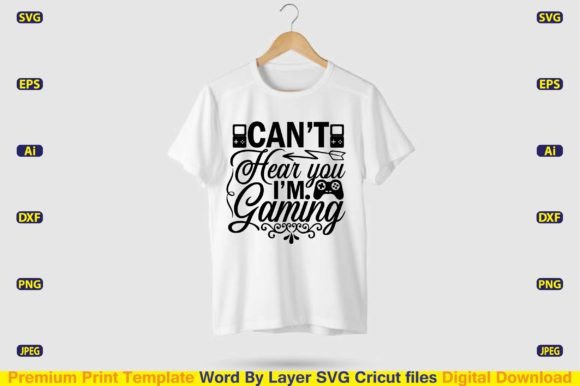
Crafting Personalized Gear: Understanding the Can’t Hear You I’m Gaming SVG Design
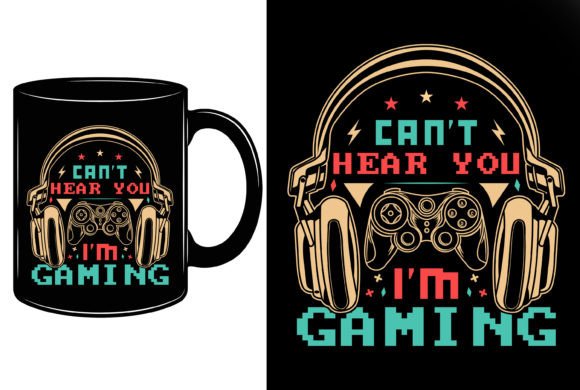
In the world of digital crafting and small-scale merchandise creation, the ability to produce unique, personalized items is a powerful asset. For hobbyists, entrepreneurs, and creative professionals, this process often begins with a digital design file. A specific example, like the Can’t Hear You I’m Gaming SVG Design, represents more than just a humorous phrase; it is a core asset in a streamlined production workflow for creating custom apparel and decor. This digital download package, typically containing layered SVG files alongside other vector formats, is a starting point that integrates into broader systems of design, cutting, and assembly.
The Role of SVG Designs in a Maker’s Workflow
An SVG, or Scalable Vector Graphic, is not merely a static image. It is a data file containing paths, shapes, and text defined by mathematical equations, allowing it to be scaled to any size without loss of quality. For someone operating a Cricut or Silhouette cutting machine, an SVG file is the primary instruction set. The Can’t Hear You I’m Gaming SVG Design package, especially when offered “word by layer,” provides a pre-separated design. This means the different color or text elements are already in individual layers within the file, drastically reducing preparation time in software like Cricut Design Space or Silhouette Studio. This pre-processing is a critical efficiency step in the overall workflow.
The practical implementation begins before the cutting machine is even powered on. Upon downloading the zip file, the user extracts and organizes the assets. The inclusion of multiple file types—AI, EPS, DXF, PNG, JPEG—ensures compatibility across different software ecosystems. A professional using Adobe Illustrator might work with the AI or EPS file for further customization, while a hobbyist might directly import the ready-to-cut SVG into their machine’s software. This flexibility addresses a key factor in preparation: having the right asset for your specific toolchain eliminates friction and allows the creator to focus on the application, not file conversion.
Integration with Tools and the Production Process
The true value of a design like the Can’t Hear You I’m Gaming SVG Design is realized in its interaction with other tools and materials. The workflow generally follows a clear path: asset acquisition, software preparation, machine cutting, and physical assembly. After importing the SVG into the design software, the user can finalize the project layout. They might resize the design to fit a specific t-shirt size, mirror it for iron-on vinyl, or duplicate it for creating multiple items. The “word by layer” structure visually presents each color component separately, making it easy to assign different cut materials—perhaps black vinyl for the text and a red accent for a secondary element.
Next, the machine executes the cut based on these digital instructions. The high-resolution 300 DPI PNG file included in the download serves a different, but equally important, role. It acts as a preview or marketing asset. A small business owner creating products to sell might use this PNG in their online store listing to showcase the design quality, or a blogger might use it in a tutorial post. This demonstrates how a single digital download supports multiple phases of a project: the SVG files for manufacturing, and the PNG files for presentation and promotion.
Practical Tips for Efficient Implementation
To smoothly integrate such a design into a routine, organization is paramount. Store the downloaded zip file and its extracted contents in a dedicated project folder or a cloud storage system alongside similar design assets. This creates a reusable library, enhancing long-term efficiency. Before cutting, always perform a test operation, especially with a new design file. Use a small piece of scrap vinyl or cardstock to verify the cut lines are clean and the layers separate correctly. This simple quality control step prevents waste of premium materials.
Consider also the end-use during the software preparation phase. If the design is for a heat-transfer vinyl t-shirt, ensure the design is mirrored. If it’s for a paper poster, layer ordering might be less critical. Understanding the properties of your final material—whether vinyl, cardstock, or fabric—informs how you handle the digital design. Furthermore, the included DXF file, often used with AutoCAD and compatible with some cutting software, offers an alternative for users in technical or engineering fields who might incorporate such designs into broader fabrication projects.
Expanding Use Cases and Creative Applications
The application of the Can’t Hear You I’m Gaming SVG Design extends beyond a simple t-shirt. The modular nature of vector files allows for adaptation. A creator could isolate elements of the design to decorate a gaming mousepad, a laptop sleeve, or a wall decal. An educator running a makerspace workshop might use this file as a teaching example to demonstrate layer management in design software. The design becomes a component in a larger creative process, interacting with other decisions about color schemes, product bases, and target audiences.
For the entrepreneur, consistency across products is vital. Using the same high-quality source design file for a range of items—t-shirts, hats, mugs via infusion printing—ensures brand coherence. The 4500x5400px resolution guarantees that even for large format prints, the output remains sharp. This directly impacts perceived quality and customer satisfaction. The design asset, therefore, sits at the center of a cycle that includes market analysis (selecting popular phrases like gaming humor), production (using the files), and sales (using the PNG for marketing).
Optimizing for Long-Term Project Management
Integrating digital assets like this into a sustainable workflow involves thinking about reuse and cataloging. After completing a “Can’t Hear You I’m Gaming” t-shirt project, save the finalized project file within your cutting software alongside the source SVG. Note any adjustments you made, such as specific sizing or material choices. This creates a template for future runs, dramatically speeding up repeat orders. For freelance designers or small business owners, this approach turns one-off downloads into a scalable inventory of ready-to-produce designs.
The interoperability of the file formats also encourages collaboration. You could send the EPS file to a graphic designer colleague for further refinement, or provide the DXF to a partner with a different fabrication setup. This highlights how a well-packaged digital download functions as a transferable asset within a network of tools and people, facilitating both solo hobby projects and more complex commercial operations.
Ultimately, a design file like the Can’t Hear You I’m Gaming SVG Design is a practical tool that bridges digital creation and physical output. Its value is unlocked not in isolation, but through its deliberate placement into a conscious workflow—from file management and software operation to machine handling and final assembly. By understanding its role as a prepared, multi-format asset, creators can reduce technical overhead, maintain quality, and focus more energy on the creative and business aspects of bringing personalized, meaningful products to life.