A Passion for Gaming: More Than Just a Pastime
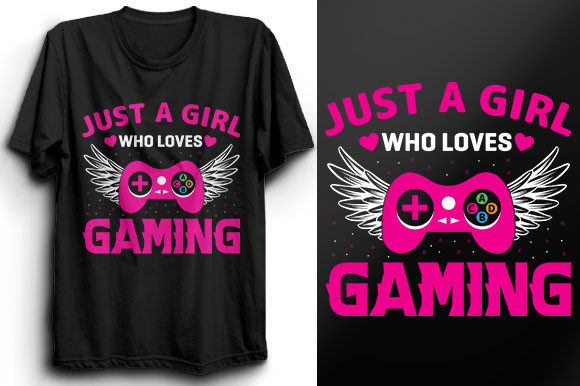
For many, the phrase “just a girl who loves gaming” might conjure a simple image: someone enjoying a hobby. But within that statement lies a profound and multifaceted world. Gaming, as a passion and a practice, transcends the stereotype of a solitary pastime. It is a gateway to community, a forge for skills, a canvas for creativity, and increasingly, a legitimate frontier for business and artistic expression. This exploration is not just about playing games; it’s about understanding the culture, the technology, and the tangible creations—like digital artwork—that spring from this vibrant ecosystem.
The Heart of the Matter: Gaming as a Modern Cultural Pillar
Gaming has evolved from niche arcades and living room consoles into a mainstream cultural force. Its significance is multifaceted. On a personal level, it provides engagement, challenge, and narrative immersion. It’s a space for problem-solving, strategic thinking, and experiencing stories from perspectives we might never encounter otherwise. For the “girl who loves gaming,” it can be a source of confidence, a way to connect with friends across distances, and a platform for self-expression through in-game customization or content creation.
In a broader societal context, gaming is a significant economic driver, a technological innovator pushing advances in graphics, networking, and hardware, and a social space where millions interact daily. It fits into modern life not as an isolated activity, but as an integrated one—blending with education through gamified learning, with work through esports and development careers, and with daily social interaction through shared experiences in virtual worlds.
Beyond the Screen: The Creative Output of a Gaming Passion
The love for gaming often extends beyond gameplay itself. It fuels creativity in adjacent fields. Fans create fan art, write stories, compose music, and produce videos. This creative impulse frequently seeks a physical or commercial outlet. Imagine a fan who wants to celebrate their passion by creating a t-shirt, a poster, a mug, or a custom sticker. This is where the digital tools of creation come into play, directly linking the virtual passion to tangible products.
Consider the offer of digital files: “You will get SVG File 300 dpi EPS File 300 dpi PNG File 4500×5400-300 dpi You can use this file for the product to be printed.” This isn’t just a list of formats; it’s a toolkit for empowerment. Each file type serves a specific purpose in the journey from digital idea to physical object.
- SVG (Scalable Vector Graphic): This is a vector format. Unlike images made of pixels, vectors use paths and points. This means an SVG can be scaled to any size—from a small laptop sticker to a large banner—without losing quality or becoming blurry. It’s perfect for logos, icons, and clean graphic designs.
- EPS (Encapsulated PostScript): Another vector format, historically a standard in professional printing and graphic design software. It ensures the design elements remain editable and scalable within advanced design applications.
- PNG (Portable Network Graphics): This is a raster format, meaning it’s made of a fixed grid of pixels. The specification “4500×5400-300 dpi” indicates a high-resolution image. 4500 pixels wide by 5400 pixels tall at 300 dots per inch (DPI) is a very large, high-quality file suitable for detailed prints where photographic clarity or complex artwork is needed, even at substantial physical sizes.
Providing all three formats gives the creator maximum flexibility. They can use the vector files (SVG/EPS) for clean, scalable designs on various products, and the high-res PNG for intricate, detailed prints. The note about the ZIP file and extraction (“Use WinZIP, WinRAR or etc.”) is a practical guide, ensuring users can access these professional files without technical hiccups, making the creative process smooth from download to print shop.
Common Misunderstandings: Demystifying the Digital and the Social
Several assumptions often cloud a clear view of gaming and its related creative economy.
First is the assumption that gaming is a passive or purely recreational activity. In reality, many games require active learning, resource management, teamwork, and communication. Titles range from complex strategy simulations requiring economic foresight to cooperative adventures demanding precise team coordination.
Second is a misunderstanding about the value and use of digital art files. Some might think a single image file is enough for any project. However, as explained, different print and manufacturing processes require different file types. A screen printer for t-shirts might prefer an SVG, while a photo lab printing a poster might want the high-res PNG. Providing a bundle addresses this need professionally.
Third is the lingering stereotype that gaming is a male-dominated space. While historically marketed that way, the demographic is now diverse. The phrase “just a girl who loves gaming” itself challenges that assumption, representing a significant and growing segment of the community who are players, creators, critics, and professionals.
The Practical Relevance: From Passion to Project
How does this all fit together in a practical sense? Let’s follow a natural example. A gamer, inspired by a favorite game’s character or symbol, wants to create a line of merchandise for their small online store or for a local gaming event. Their passion is the motivation. Their product idea is the goal. The digital asset bundle (SVG, EPS, PNG) is the key resource.
- Conceptualization: The idea stems from their engagement with the game—a love for its art style, lore, or community.
- Asset Acquisition: They obtain the professionally prepared design files. These are ready-for-print, meaning the technical hurdles of resolution, scaling, and format compatibility are already solved.
- Application: They communicate with a printer or upload the appropriate file to a print-on-demand service. For a vinyl cut decal, they send the SVG. For a detailed art print, they upload the PNG.
- Realization: The physical product is created, embodying their digital passion. This could be for personal use, for sale, or as a gift for fellow community members.
This process illustrates how a personal hobby intersects with modern digital craftsmanship, e-commerce, and creative entrepreneurship. It shows that “loving gaming” can be the first step in a chain that leads to tangible outcomes.
Building a Broader Understanding: Gaming in a Connected World
Ultimately, to understand the topic fully, one must see gaming not as an island, but as a node in a wider network. It connects to:
- Technology: Driving demand for better hardware, software, and online infrastructure.
- Art & Design: Inspiring visual styles, character design, and digital asset creation that spill over into other media.
- Social Science: Offering insights into online community formation, collaboration, and digital identity.
- Business: Creating entire industries around game development, streaming, esports, and ancillary merchandise.
- Education: Providing frameworks for interactive learning and skill development in areas like coding, logistics, and even history through narrative-driven games.
The individual who loves gaming is often participating in many of these domains simultaneously. They are a consumer of tech and art, a member of a social community, a potential business creator, and an engaged learner. The offer of ready-to-print design files is a small but concrete example of how the digital culture of gaming provides tools that empower individuals to become creators and participants in a larger economic and creative circuit.
Conclusion: A Celebration of Engagement and Empowerment
“Just a girl who loves gaming” is, therefore, a starting point for a rich story. It’s a statement about personal identity in a digital age. It acknowledges a passion that is both deeply personal and widely shared. And when that passion is coupled with the practical tools to express it physically—through high-quality, versatile digital files designed for professional printing—it becomes a story of empowerment. It moves from simply enjoying a virtual world to leaving a mark on the physical one, sharing that passion through products, art, and community. In understanding this journey, we see gaming not just as play, but as a significant and layered aspect of modern creative life.